Digital Employee
Process Operator
Executes standardized processes with perfect consistency, no fatigue, no variation. Runs your documented procedures exactly the same way, every time.



Key Capabilities
What the Process Operator Does
This isn't robotic process automation that breaks when the UI changes. This is an AI worker that understands process intent, adapts to minor variations, and handles the judgment calls that pure automation can't.


Follow Documented Procedures
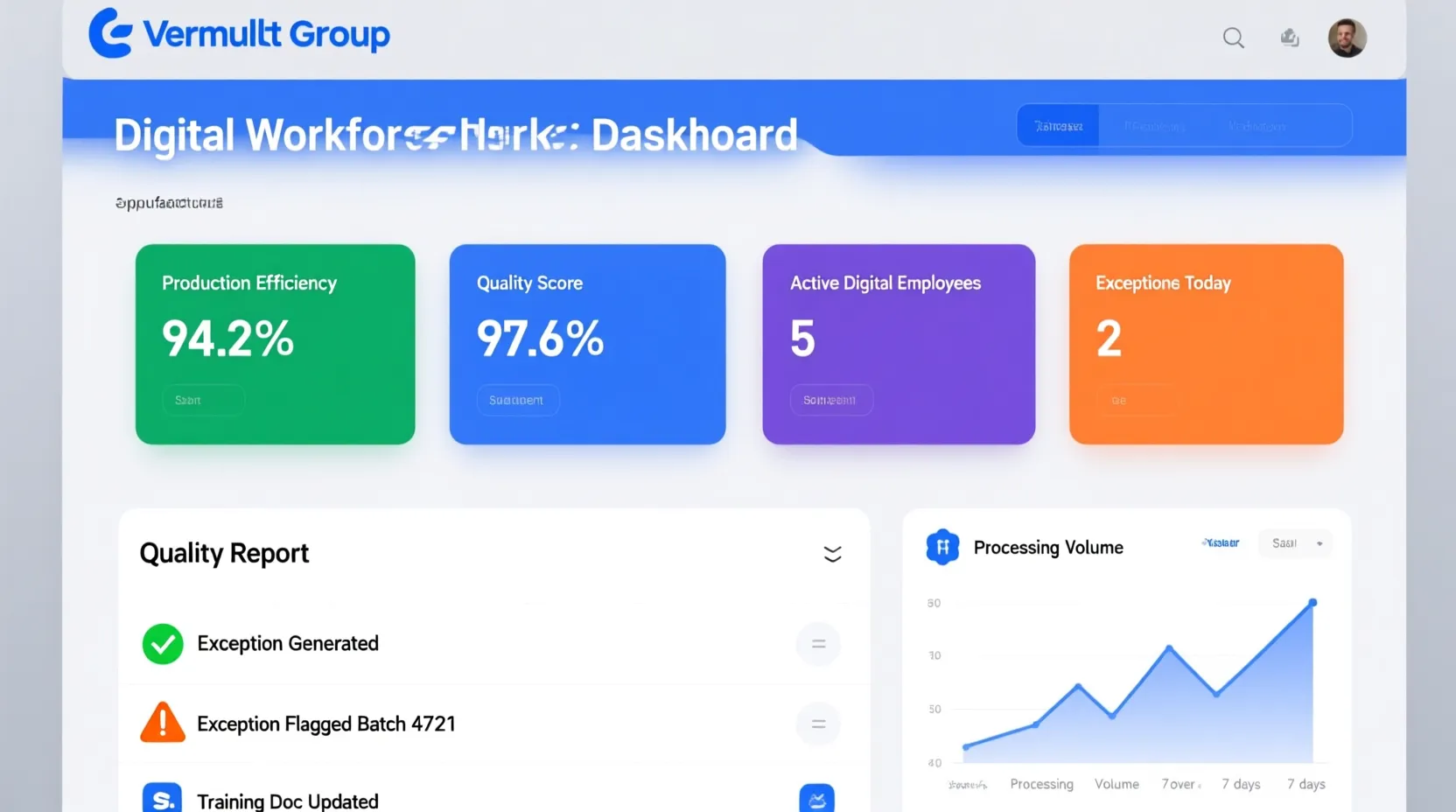
Executes multi-step processes exactly as documented. Validates each step before moving to the next. Maintains process state across interruptions. Never skips steps even under time pressure.
Decisions & Workflow Execution
Makes standard decisions using your documented criteria. Coordinates actions across multiple systems. Waits for approvals at defined gates. Retries failed steps with exponential backoff. Handles parallel tasks and dependencies.
Exception Escalation
Recognizes when situations fall outside normal parameters. Routes exceptions to the right human expert with complete context. Learns from escalation resolutions to reduce future escalations by 60-70% within the first month.
Audit Trails & Monitoring
Records every action with timestamp and reasoning. Provides compliance-ready audit logs. Tracks cycle times, identifies bottlenecks, reports success rates and exception frequencies. Makes it trivial to answer 'what happened?'
Ideal Use Cases
Where the Process Operator Excels
The Process Operator delivers the most value in environments with documented procedures, compliance requirements, and processes that need to run consistently at scale.

Manufacturing Quality Control
Execute inspection procedures consistently across all units. Document every check performed and result observed. Escalate out-of-spec conditions to QA engineers. Maintain ISO 9001 compliance automatically.
Order Fulfillment
Process orders through credit check, inventory verification, picking, packing, and shipping. Handle standard modifications according to rules. Escalate problematic orders before they become customer issues.
Financial Close Processes
Execute month-end reconciliation procedures. Validate data across systems. Flag discrepancies for accounting review. Generate compliance reports. Ensure SOX-compliant audit trails.
IT Service Management
Handle standard provisioning requests like new user accounts and system access. Follow change management procedures. Execute routine maintenance workflows. Escalate when configurations deviate from standards.
Training Process
How the Process Operator Is Trained
The Process Operator learns your procedures through a structured four-phase training approach. Escalation rates typically drop 60-70% within the first month.
Phase 1: Documentation Review
We analyze your existing SOPs, work instructions, and process documentation. The Digital Employee learns your process vocabulary, decision points, and exception handling rules. Timeline: Week 1.
Phase 2: Process Walkthrough
Subject matter experts demonstrate how they actually execute processes. The Operator learns the nuances not captured in documentation — judgment calls, context clues, acceptable vs dangerous shortcuts. Timeline: Week 2.
Phase 3: Supervised Execution
The Operator executes processes under supervision. Experts review outputs and provide feedback. The system learns where to be strict (regulatory steps) versus where minor variation is acceptable. Timeline: Weeks 3-4.
Phase 4: Exception Training
We review historical exceptions and how they were resolved. The Operator learns what situations require human judgment and how to escalate with appropriate context. Timeline: Week 4.
Integration Points
Connects With Your Enterprise Systems
The Process Operator integrates with the platforms that run your business — no rip-and-replace required.
ERP & Business Systems
SAP, Oracle, Microsoft Dynamics — execute business processes directly. MES platforms for shop floor process control. Seamless bidirectional data flow.
Workflow & Quality Systems
Camunda, n8n, Zapier — orchestrate complex processes. ETQ, MasterControl — execute inspection procedures. Full process lifecycle management.
Service & Ticketing
ServiceNow, Jira Service Desk — handle service requests and change management. Route, escalate, and resolve tickets following your defined procedures.
Documents & Notifications
SharePoint, Documentum — store process artifacts and maintain audit trails. Email, Slack, Teams — escalation alerts and real-time status updates.
See the Process Operator in Action
Bring a process you're tired of executing manually. We'll show you how the Process Operator handles multi-step workflows, makes routine decisions, escalates exceptions, and generates compliance audit trails.


Prospect Smarter. Book Faster.
Get Started

